
 Image 1 of 1
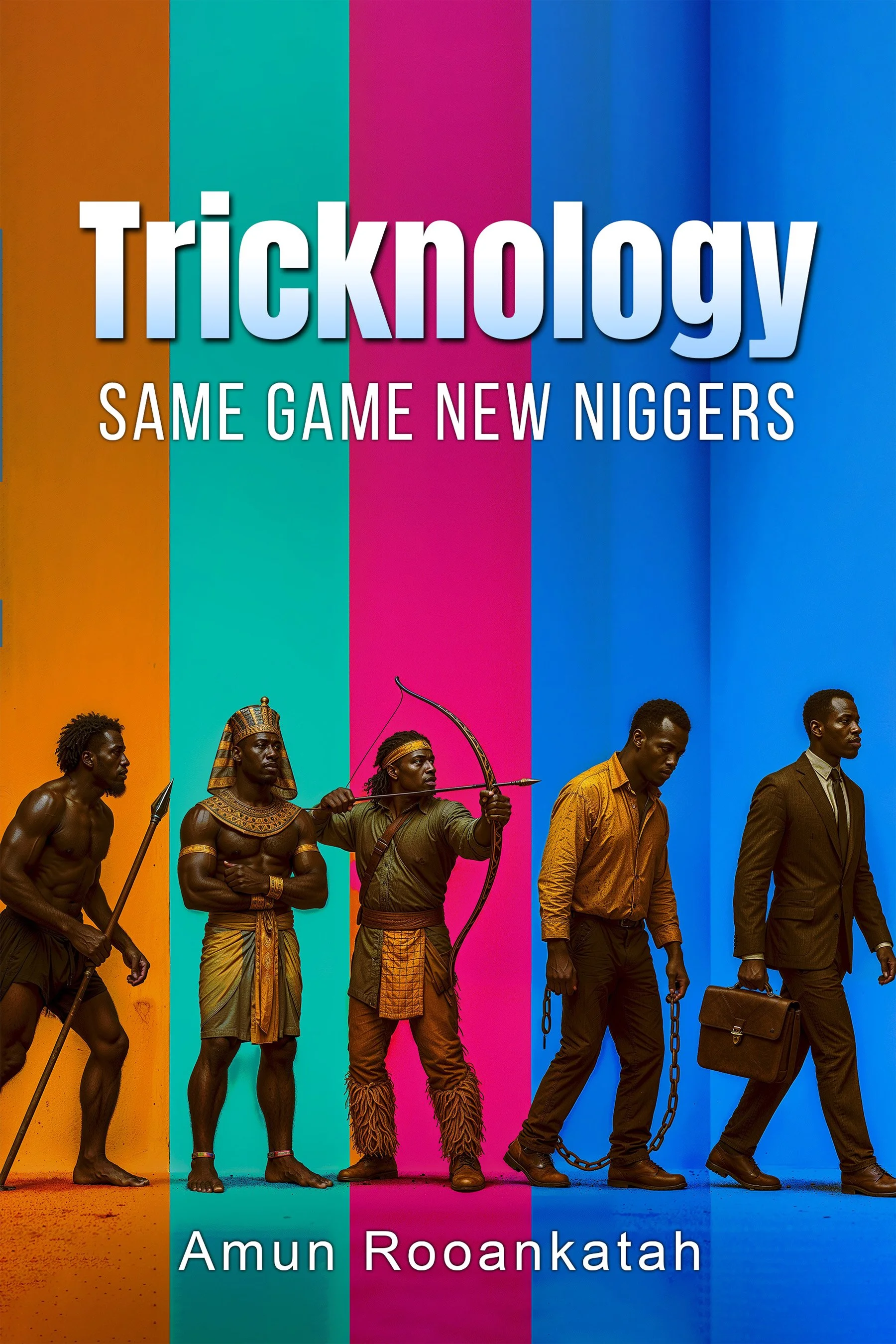
History shapes identity, but whose version has been accepted as truth? Tricknology challenges readers to examine long-standing narratives surrounding race, colonialism, and the language used to define entire populations. Drawing from historical writings, anthropology, genetics, and documented scholarship, Amun Rooankhatah invites readers to question ideas that have influenced generations.
Chapters investigate the origins of terms such as Caucasian, Aryan, Nordic, and Indo-European, tracing how many classifications emerged during periods of colonial expansion and later became intertwined with concepts of racial hierarchy. Quotations from historians, anthropologists, linguists, and scientists encourage readers to explore the evidence independently instead of accepting inherited assumptions.
Colonialism, cultural identity, Indigenous histories, and modern genetics intersect in a narrative designed to provoke discussion and inspire deeper research. Arguments are presented with references that encourage critical examination, placing documented sources alongside the author's interpretations.
Curiosity sits at the center of every page. Questions replace certainty, accepted stories invite fresh examination, and familiar concepts take on new dimensions.
Anyone fascinated by history, race, social thought, or intellectual debate will discover a book designed to encourage critical thinking and spark conversations long after the final chapter closes.
History shapes identity, but whose version has been accepted as truth? Tricknology challenges readers to examine long-standing narratives surrounding race, colonialism, and the language used to define entire populations. Drawing from historical writings, anthropology, genetics, and documented scholarship, Amun Rooankhatah invites readers to question ideas that have influenced generations.
Chapters investigate the origins of terms such as Caucasian, Aryan, Nordic, and Indo-European, tracing how many classifications emerged during periods of colonial expansion and later became intertwined with concepts of racial hierarchy. Quotations from historians, anthropologists, linguists, and scientists encourage readers to explore the evidence independently instead of accepting inherited assumptions.
Colonialism, cultural identity, Indigenous histories, and modern genetics intersect in a narrative designed to provoke discussion and inspire deeper research. Arguments are presented with references that encourage critical examination, placing documented sources alongside the author's interpretations.
Curiosity sits at the center of every page. Questions replace certainty, accepted stories invite fresh examination, and familiar concepts take on new dimensions.
Anyone fascinated by history, race, social thought, or intellectual debate will discover a book designed to encourage critical thinking and spark conversations long after the final chapter closes.